

Advanced cancer care often requires careful coordination of surgical and oncological approaches, particularly when cancer is recurrent, locally advanced or involves the peritoneal cavity.
For patients seeking advanced cancer care, treatment decisions begin with understanding the cancer type, stage, tumour characteristics, disease distribution and previous treatment history. These factors can help determine whether surgery, chemotherapy, targeted therapy, immunotherapy or specialised procedures may have a role.
Surgical planning may include laparoscopic and robotic cancer surgery for appropriately selected patients. With the use of technologies such as ICG dye, newer Da Vinci robotic systems and single-incision systems, minimally invasive surgical options can be considered for appropriate cancers and clinical situations.
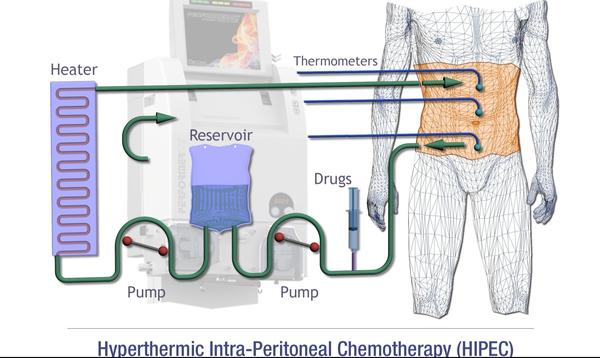
For selected cancers involving the peritoneum, specialised approaches such as HIPEC and PIPAC may also be considered. Their suitability depends on disease extent, previous treatment, overall health and whether the proposed approach is appropriate for the patient's treatment objectives.
Dr. Ninad Katdare's practice spans gastrointestinal, gynecologic and peritoneal oncology, areas in which treatment decisions may require coordination between surgical and non-surgical cancer care.
In complex or recurrent disease, decisions may also depend on whether the cancer can be adequately addressed surgically, whether systemic treatment is required and how different treatment modalities can be integrated. This makes multidisciplinary evaluation particularly important when several treatment pathways are possible.
For patients seeking to understand specialised treatment approaches in Vile Parle, Dr Ninad Katdare Cancer Surgeon can explain how surgical and multidisciplinary options may be considered according to the nature and extent of the cancer.